Retractable Awning Special Brackets

Bespoke Awning Brackets
Retractable Folding Arm Awnings are a popular shading solution for patios and terraces and many business premises too. However, single storey buildings, including bungalows, extensions, thermalite walls, and timber buildings, present unique installation challenges not encountered on standard two storey brick houses. These challenges can be confidently resolved using a range of specialist made to order steel bracketry, from spreader plates to goalpost frames, each suited to different building scenarios. Standard 'wall' brackets sipplied for most retractable folding arm awnings are only for face fitting to a solid wall or structure where there is sufficient strength to hold the forces of the awning, particularly when extended. More than half of buildings in the UK do not have this and special brackets are require to spread the weight loading across a larger area or eslewhere on the wall or building.
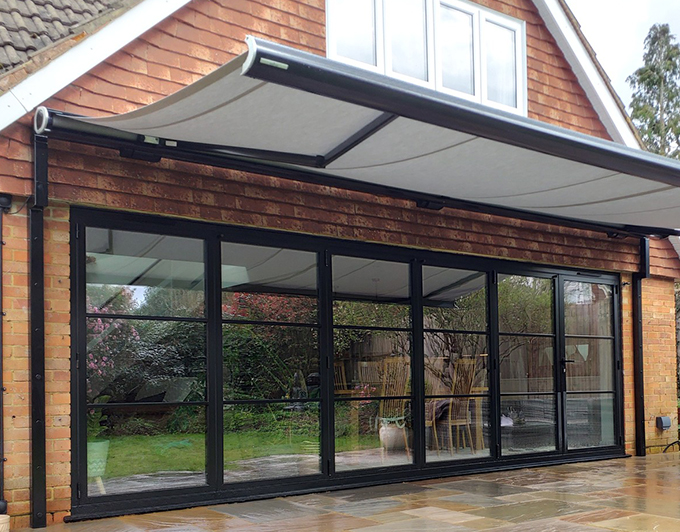
Every retractable awning must ideally be installed at a pitch, typically a minimum of 14 degrees. This ensures rainwater runs off the fabric rather than pooling, while also improving sun shading performance. On a single storey building, the distance between the top of the patio doors and the roofline is often very small, leaving insufficient room to mount the awning high enough to enable this pitch in the canopy when extended.
The gutter bracket or vertcial spreader bracket enables the awning to be situated higher than the building wall height and often higher than the guttering just to gain enough height for the awning to have a decent pitch. The brackets of course also allow suitable fixing points to be used lower down the wall where there is greater strength as well as avoiding the soffit overhang.
If you are using the awning purely for sun shade then of course the awning pitch can be less but the onus is on the operator to close this is rainy conditions.
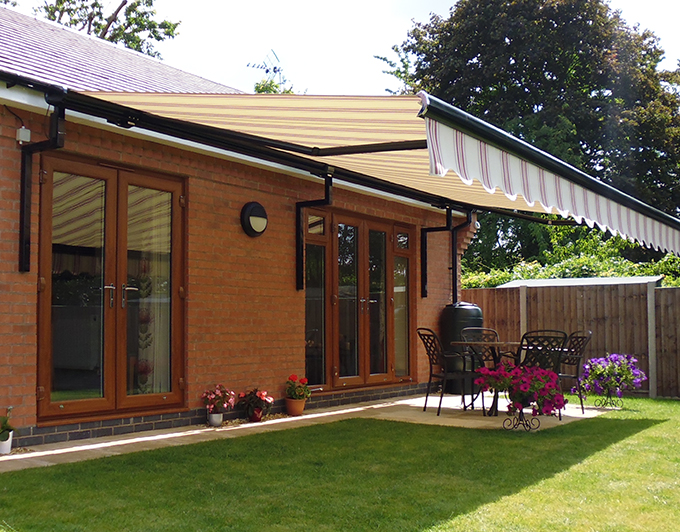
On a two storey house, the weight of the upper storey brickwork provides downward compression on the ground floor wall to help resist pull out forces. A single storey building lacks this compressive load, meaning standard awning brackets could literally pull the bricks away from the structure. The wind loading on an extended awning acts as a massive lever, making proper specialist bracketry essential to ensure a safe installation. Half brick and half timber built homes present the same issues as do many retial shops with a timber constructed fascia above the main door and window. Simply nothing to fix to which is strong enough..
This solution is seen often when there are tiled or timber clad sections in the upper half of a house wall and the wall strength is in the lower half of the wall.
Use these brackets to take all the strain on the strongest part of the wall.
The table below shows the required mounting height for various awning projections at different pitch angles, based on a 2 metre walk under height required at the front when fully extended:
Spreader plates are vertical or horizontal metal plates with multiple fixing points distributed down or across the length to spread the load across a larger area of brickwork. They are ideal for single storey extensions with adequate height or above wide bi-fold doors where steel lintels cannot handle twisting forces. They are also crucial on cavity walls where the outer brick leaf needs extra support, though they do not solve height issues.
These are most often used on any buidlings with very modern super light building blocks with a lesser ability to take sheer stress loadings in small areas.
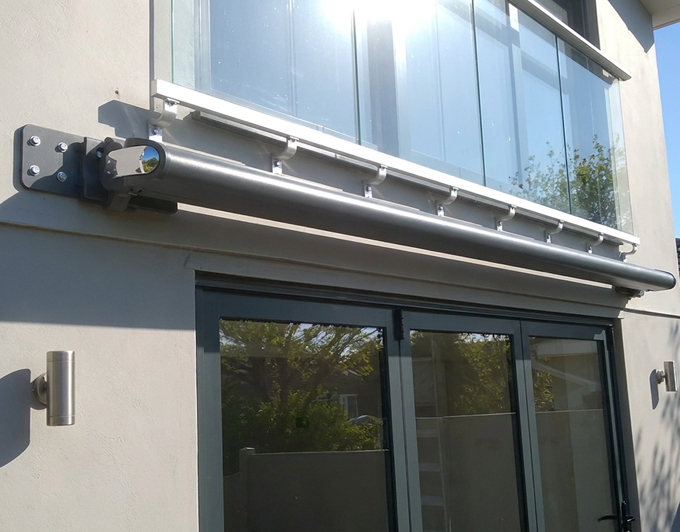
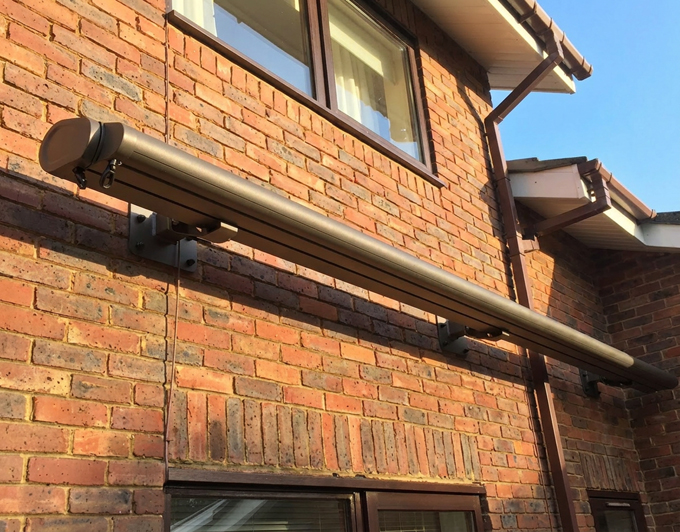
Cantilever brackets, or gutter brackets, spread the fixing load down the wall facade while featuring an arm that extends forward and upward. This wraps under and in front of the fascia board and guttering to position the awning cassette above the roofline. They are required on bungalows where the wall height below the eaves is too low to achieve a 14 degree pitch.
These can also be manufactured as 'flag post' brackets where the awning bracket position might be not directly in line with the vertical fixing area underneath.
These are a very popular bracket type simply because of the amount of single storey exensions and homes that exist in the UK today along with a surge over the last few years in the use of larger glass bi folding doors taking up all the fixing space available around the aperture.
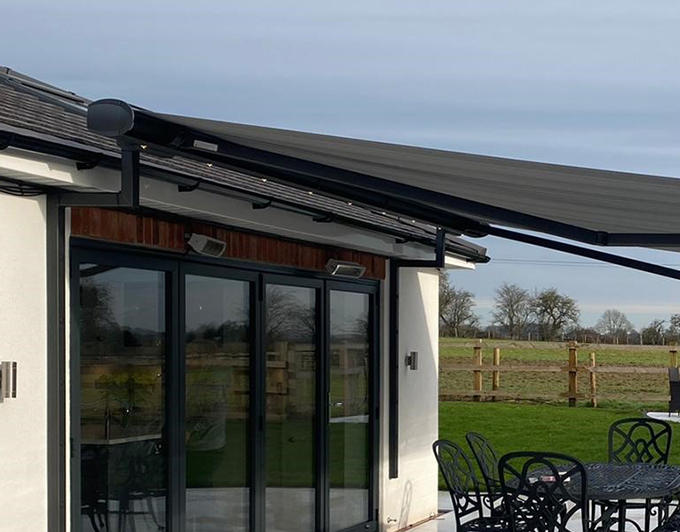
Stand off brackets are heavy duty spacer brackets that project the awning away from the wall to clear exterior plumbing or other obstacles. When a downpipe or soil pipe runs vertically exactly where the awning needs to sit, these brackets allow the awning cassette to bridge the pipework safely without crushing it.
These brackets are often used with other bracket types where there are maybe 2 main brackets on the outer edges of the awning and a third or possible more brackets are required in the centre and the spacing needs to be the same as the outer brackets.
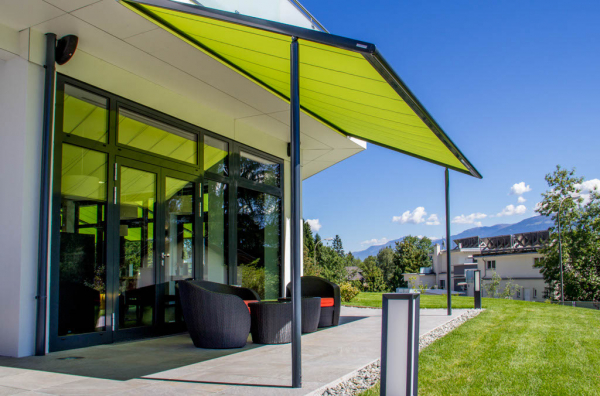
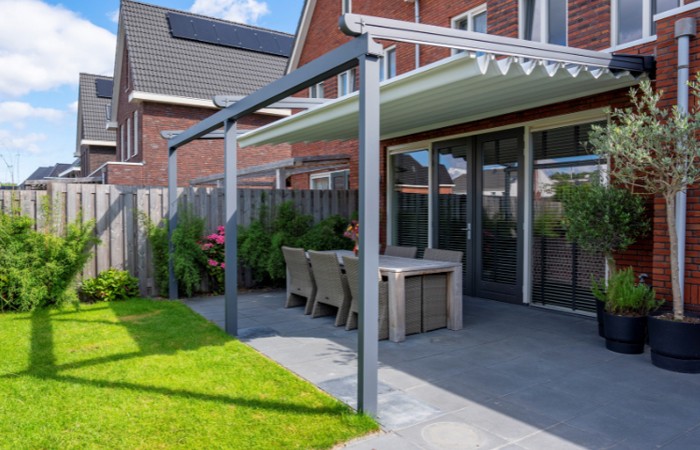
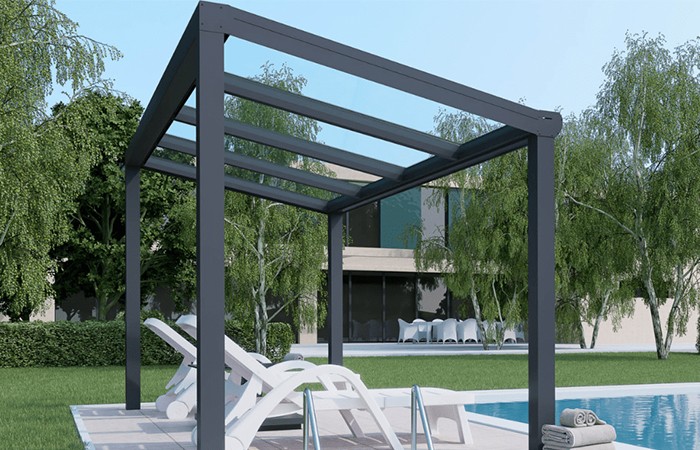
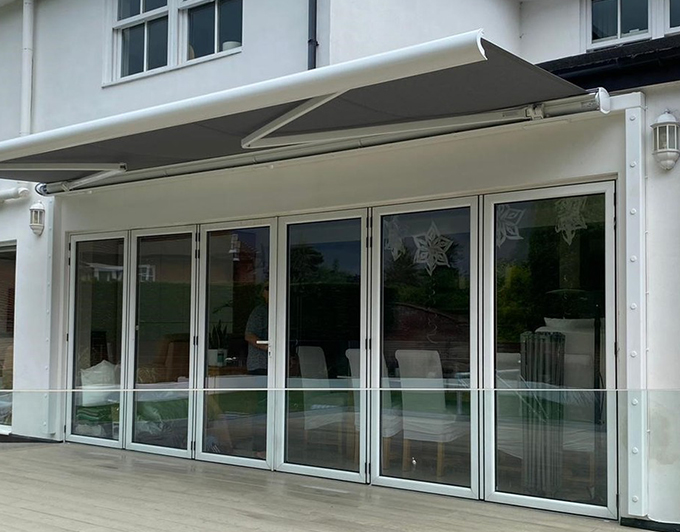
Goalpost frames are freestanding or wall supported box section steel frameworks where the awning is suspended from a horizontal beam. They are necessary on fully glazed elevations, conservatories, or orangeries where there is no solid brickwork available for mounting. They also provide a solution for heavily modified extensions with weak wall materials or for creating standalone shading zones.
These brackets are often used with larger and heavier awnings and when the house is rendered over either very old and brittle bricks or the super modern highly insulated blocks used in building on some homes.
Rafter brackets attach the awning directly to the exposed protruding timber roof rafters, bypassing the weak brick wall entirely. Top fix brackets mount the awning to the underside of a solid roof overhang, while roof top brackets bolt directly through the flat roof surface as a last resort. All roof-based solutions require verification of structural strength, and roof top mounts require professional weatherproofing.
The type of wall construction dictates the bracket choice and the chemical fixings required, as standard rawlplugs are never sufficient. We highly recommend adding an automated wind sensor to any awning installed on a single storey building to protect structurally weaker walls from extreme leverage forces.
[IMAGE: montage of wall types: solid brick, blockwork, timber cladding, glazing, each labelled]
Use this logic to determine your mounting solution:
- Adequate wall height: If yes, check structural soundness; if no, use cantilever, rafter, or goalpost brackets.
- Structural soundness: If yes, use standard brackets or spreader plates; if no, spreader plates are mandatory or use a goalpost frame.
- Surface obstructions: If present, use stand-off brackets for pipes or cantilever brackets for fascias.
- Roof overhangs: If available and structural, consider top fix or rafter brackets for an integrated look.
.png)
A minimum pitch of 14 degrees is recommended, requiring a fall of approximately 25 cm per metre of projection to maintain safe water runoff. Retractable awnings feature two distinct designs: End Fix models limit installation options, while Torque Bar models allow brackets to be positioned anywhere along the width to bypass weak lintels. Furthermore, wide cassette awnings are heavily engineered and require bracket strategies calculated on maximum wind loading force rather than static closed weight.